
Desserts
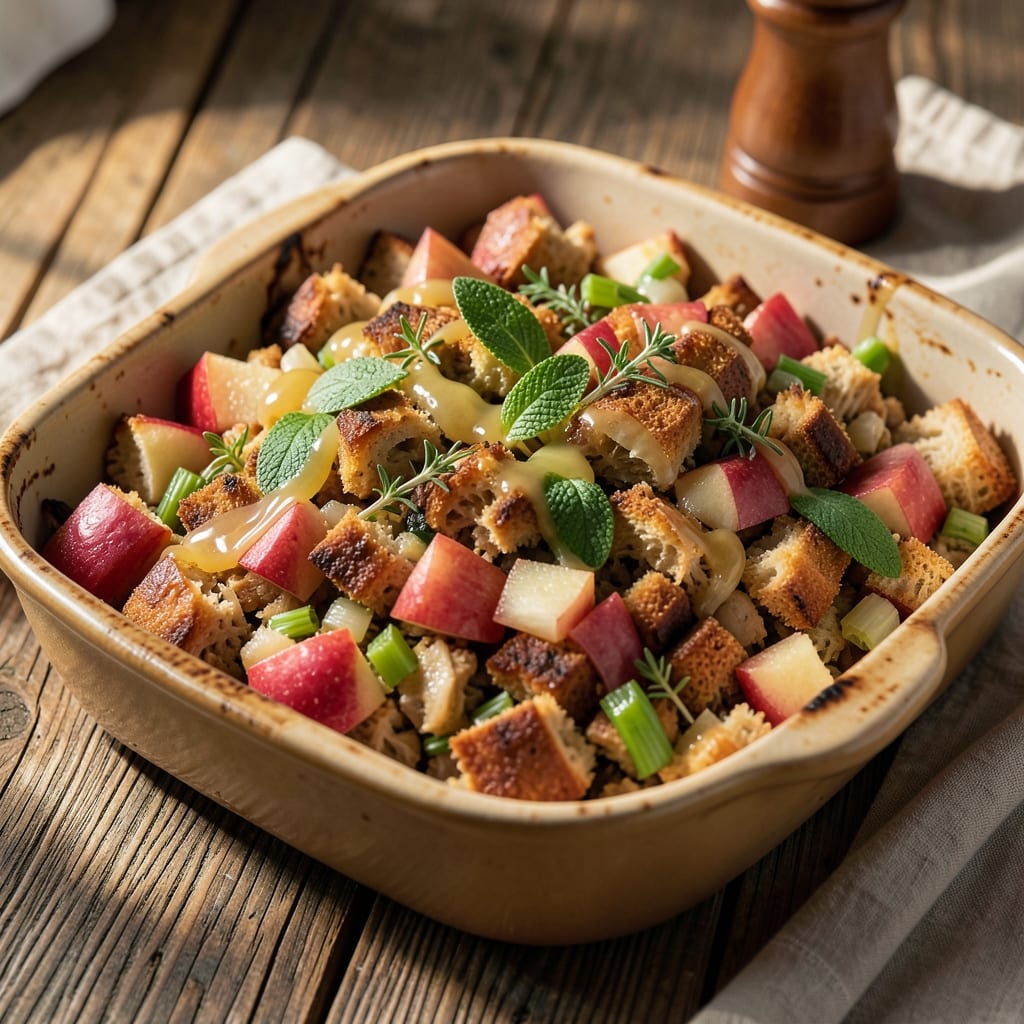
This apple and herb stuffing recipe transforms traditional holiday stuffing into something extraordinary—crispy golden edges with tender, fragrant centers infused with fresh sage and thyme. The secret lies in caramelizing apples alongside onions and celery, then combining them with toasted bread cubes and aromatic herbs for a stuffing that's both comforting and sophisticated. I developed this recipe after years of perfecting the balance between crispy edges and moist centers, ensuring every bite delivers that perfect contrast of textures and flavors.
The beauty of this recipe is its versatility—it works equally well as a side dish for Thanksgiving turkey, a hearty main course for a vegetarian feast, or even a delicious addition to roasted chicken dinners. The apples add natural sweetness that complements the savory herbs, while the crispy bread cubes provide that satisfying crunch. What makes this stuffing truly special is the way the flavors meld together during baking, creating a harmonious blend of sweet, savory, and aromatic notes that will have everyone at the table asking for seconds.
By the time it emerges from the oven, you'll have a stuffing with crispy edges that shatter with every bite, a tender interior that's infused with the rich flavors of caramelized apples and fresh herbs, and a golden-brown crust that's impossible to resist. The aroma alone will fill your kitchen with warmth and anticipation, making it the perfect centerpiece for any holiday meal. This recipe is designed to impress, whether you're hosting a gathering or simply treating yourself to a cozy, homemade meal.
Ready to elevate your stuffing game? This recipe delivers restaurant-quality results with simple, foolproof techniques that anyone can master. The best part? You can customize it with your favorite herbs, nuts, or even a splash of wine for added depth. Let's get started on creating a stuffing that will become a new family tradition.
Ingredients for apple and herb stuffing
Transform ordinary ingredients into extraordinary stuffing with crispy edges and fragrant herb centers.
| Ingredient | Amount | Notes |
|---|---|---|
| Day-Old Baguette 🍞 | 1 ½ lb | Crust removed, cubed small |
| Honeycrisp Apples 🍎 | 3 medium | Peeled, diced small |
| Yellow Onion 🧅 | 1 whole | Diced fine |
| Celery Stalks 🥬 | 3 whole | Diced small |
| Fresh Sage Leaves 🌿 | ½ cup | Chopped finely |
| Fresh Thyme Leaves 🌿 | ¼ cup | Chopped finely |
| Unsalted Butter 🧈 | ½ cup | Cold, cubed |
| Chicken Broth 💧 | 1 ½ cups | Low-sodium preferred |
| Salt 🧂 | 1 ½ tsp | Kosher or sea salt |
| Black Pepper 🌶️ | 1 tsp | Freshly ground |
| Pecans 🥜 | ½ cup | Toasted, chopped |
| Dry White Wine 🍷 | ¼ cup | Optional, dry variety |
The Honeycrisp apples are the secret weapon here—their crisp texture and natural sweetness caramelize beautifully alongside the onions and celery. Local farmers markets often have them in season, but any crisp apple like Fuji or Gala works. The baguette? Day-old is key—it's drier and toasts to perfect crunch. If you can't find a baguette, a crusty Italian loaf works too. Toast the bread cubes in the oven first (400°F for 10 minutes) so they're crispy before they even hit the baking dish. That's what gives this stuffing its signature texture contrast.
No fresh sage? Dried works at one-third the amount, but fresh is worth hunting down—it's the star of this dish. Short on pecans? Walnuts or almonds add a similar crunch. The chicken broth can be swapped for vegetable broth if you're vegetarian, but don't skip the wine—it adds depth. Sauvignon Blanc or Pinot Grigio work perfectly. For extra richness, add a splash of apple cider (about 2 tablespoons) to the broth before mixing. And if you're making this ahead, the flavor actually improves overnight—just cover and refrigerate the unbaked stuffing for up to 24 hours.
This stuffing reheats beautifully—honestly tastes better the next day once everything melds. Store leftovers in an airtight container for up to 5 days, or freeze for 3 months. For freezing, assemble the stuffing in a baking dish, cover tightly with foil, and bake straight from frozen (add 15-20 minutes to the cooking time). The pecans stay crispy if you toast them fresh the day you serve, but they're fine in the stuffing too. Just don't skip the final sprinkle of fresh herbs over the top—that's the magic.
Why You'll Love This Recipe
- No Chopping Chaos: The day-old baguette does all the work—no need to buy fancy bread or slice anything. Just tear it into hunks, toss it in, and let the oven handle the magic. (Yes, even if you burn toast sometimes.)
- Sweet-Savory Magic: Honeycrisp apples add that crisp, juicy bite while the sage and onion deepen into something warm and earthy. It’s the kind of flavor that makes you pause mid-bite—like a hug for your taste buds.
- Leftovers? No Problem: This stuffing reheats like a dream—crispy edges soften just enough, and the apples stay tender. I’ve turned it into a sandwich filling, a breakfast hash, and even a quick lunch. Versatile enough to eat it three times in a week.
- Pantry Staple Upgrade: You’re probably already using these ingredients—onions, celery, and stale bread—just in a different way. No fancy substitutions needed, and the cost? Peanuts. It’s the kind of recipe that makes you feel like a genius for using what you’ve got.
Step-by-step instructions for apple and herb stuffing
This stuffing delivers perfect crispy edges and tender, flavorful centers every time—here's how to make it shine.
Dry and Cube the Baguette for Crispy Edges
Preheat your oven to 350°F and line a baking sheet with parchment paper. Spread the 1.5 lb day-old baguette cubes in a single layer on the sheet. Bake for 15-20 minutes, stirring halfway, until the cubes are completely dry and slightly golden. This step is crucial for achieving those crispy edges—don't skip it!
While the baguette dries, peel and dice the 3 medium Honeycrisp apples into small, even cubes. The apples should be about ¼-inch in size for even cooking. Set them aside—they'll add natural sweetness that balances the savory herbs.
Sauté the Vegetable Base
In a large skillet over medium heat, melt 3 tablespoons of the 0.5 cup unsalted butter. Add the 1 whole yellow onion and 3 whole celery stalks, both diced fine. Cook for 8-10 minutes until the onion is translucent and the celery softens slightly. You'll see the vegetables release moisture—this is normal and helps build flavor.
Push the vegetables to one side of the pan and add the remaining 2 tablespoons butter. Stir in the 0.5 cup chopped fresh sage leaves and 0.25 cup chopped fresh thyme leaves. Cook for 1-2 minutes until the herbs release their aromatic oils—this is where the magic happens for that fresh herbal flavor.
Toast the Pecans and Deglaze
Transfer the sautéed vegetables to a large mixing bowl. In the same skillet, add the 0.5 cup pecans and toast over medium heat for 3-4 minutes, stirring constantly, until they're fragrant and lightly golden. Remove from heat and let cool for 1 minute—they'll continue to crisp up as they cool.
Pour in the 0.25 cup dry white wine (if using) and scrape up any browned bits from the bottom of the pan. Let it simmer for 1-2 minutes until reduced by half. This deglazing step captures all the flavor from the sautéed vegetables and adds depth to the stuffing.
Combine All Ingredients
Add the toasted pecans and wine reduction to the mixing bowl with the sautéed vegetables. Gently fold in the dried baguette cubes, 1.5 tsp salt, and 1 tsp black pepper. Stir in the diced apples and mix until everything is evenly coated. The stuffing should look moist but not soupy—if it's too dry, add 1-2 tablespoons chicken broth to help bind it.
Here's the thing—this is where the texture comes together. The apples will release juices as they cook, so we want everything just barely moist at this stage. Taste a spoonful and adjust seasoning if needed. The stuffing should be flavorful but not overly salty—we'll finish with more broth later.
Bake Until Golden and Crispy
Transfer the stuffing to a greased 9x13-inch baking dish and spread it evenly. Pour the 1.5 cups chicken broth evenly over the top—this will steam the stuffing and create those crispy edges. Bake at 375°F for 30-35 minutes until the top is golden brown and crispy, and the edges are deeply browned.
If the top starts to brown too quickly, tent it loosely with aluminum foil. The stuffing is done when it's heated through and the edges are crispy enough to hold their shape. Let it rest for 5-10 minutes before serving—this allows the juices to redistribute and the texture to set perfectly. Serve warm with your favorite main course!
Pro Tips For Making Apple And Herb Stuffing
- Dry the Baguette First: Tear that day-old baguette into chunks, then spread them on a baking sheet and let them sit for 30 minutes at room temperature—this isn’t just about drying, it’s about getting rid of that stale, gummy texture that ruins stuffing. I used to skip this and ended up with a soggy mess, no matter how much butter I added.
- Sauté Onions Low and Slow: Cook the yellow onion in butter until it’s soft and translucent, not browned—this takes about 8-10 minutes on medium-low heat. Rushing this step turns the onions bitter and overpowers the apples and herbs.
- Dice Apples Small: Cut the Honeycrisp apples into ¼-inch cubes, not chunks—this ensures even cooking and prevents them from turning to mush while the rest of the stuffing bakes. Big pieces stay undercooked; tiny pieces caramelize perfectly.
- Toast the Celery: Pulse the celery stalks in a food processor until they’re finely chopped, then spread them on a dry skillet and toast for 2-3 minutes until fragrant. This step brings out their flavor and prevents them from turning to sludge in the oven.
Dietary considerations for this apple and herb stuffing
Gluten-Free Adaptation
For a gluten-free version, replace the baguette with gluten-free bread cubes—I recommend Schär Gluten-Free Bread or Canyon Bakehouse Gluten-Free Loaf. Toast them thoroughly to achieve that crispy texture. Use a gluten-free chicken broth (like Pacific Foods) to avoid cross-contamination. The rest of the recipe stays the same, but check labels for hidden gluten in broth or wine. 🌱
Vegetarian Option
Swap the chicken broth for vegetable broth (I love Imagine Foods) and add mushrooms for umami depth. Sauté 8 oz sliced cremini mushrooms with the onions and celery. For extra richness, stir in 1 tbsp nutritional yeast before baking—it adds a cheesy, savory note that vegetarians will love.
Nut-Free Version
Skip the pecans entirely or replace them with toasted pumpkin seeds (½ cup) for a nut-free crunch. Toast the seeds in the same skillet as the pecans until fragrant. If you want extra texture without nuts, add dried cranberries (¼ cup) for a sweet-tart contrast that pairs beautifully with the apples.
Lower-Carb Modification
Reduce the bread to 1 lb and add 1 cup diced butternut squash (roasted at 400°F for 20 minutes) to bulk up the dish. Use low-sodium chicken broth and reduce the butter to ¼ cup to cut calories. The squash adds natural sweetness and moisture while keeping the dish hearty and satisfying.
Dairy-Free Adjustment
Replace the butter with vegan butter (I recommend Miyoko's) and use unsweetened almond milk (2 tbsp) to keep the stuffing moist. The flavor stays rich and aromatic—just ensure all other ingredients (like broth) are dairy-free. The texture remains crispy and tender with this swap.
Nutrition facts
Frequently asked questions
Can I use dried herbs instead of fresh?
You can substitute dried herbs, but use one-third the amount of what's called for in fresh. For this recipe, that means 1.5 teaspoons dried sage and 0.5 teaspoon dried thyme. Toast the dried herbs in the skillet for 30 seconds to release their aroma before adding to the vegetables. Fresh herbs give the best flavor, but dried works in a pinch!
How do I keep the stuffing moist?
The key is balancing the broth-to-bread ratio and avoiding overbaking. Start with 1.5 cups broth for this recipe, then add 1-2 tablespoons more if the stuffing looks dry before baking. Bake until the edges are crispy (30-35 minutes), then tent with foil if the top browns too quickly. Let it rest 5-10 minutes after baking—this lets the juices redistribute.
What's the best way to reheat leftovers?
For best results, spread leftovers on a baking sheet and reheat at 350°F for 10-15 minutes until crispy. Add 1-2 tablespoons broth to the dish for extra moisture. Microwaving works in a pinch (cover with a damp paper towel for 30-45 seconds), but it won't restore the crispy texture. The stuffing actually tastes better the next day as flavors meld!
Can I make this stuffing ahead?
Assemble the stuffing up to 24 hours ahead and refrigerate in an airtight container. Bake straight from the fridge, adding 10-15 minutes to the cooking time. For freezing, assemble in a baking dish, cover tightly with foil, and freeze for up to 3 months. Bake from frozen (add 20-25 minutes to the time). The flavors deepen when made ahead!
Why does my stuffing turn out gummy?
Gummy stuffing usually means too much moisture or underbaking. Check your bread-to-broth ratio—start with 1.5 cups broth for this recipe. Also ensure your bread cubes are properly dried before mixing. Bake until the edges are crispy and the internal temperature reaches 165°F. If using apples, make sure they're diced small so they cook through completely.