
Main Courses
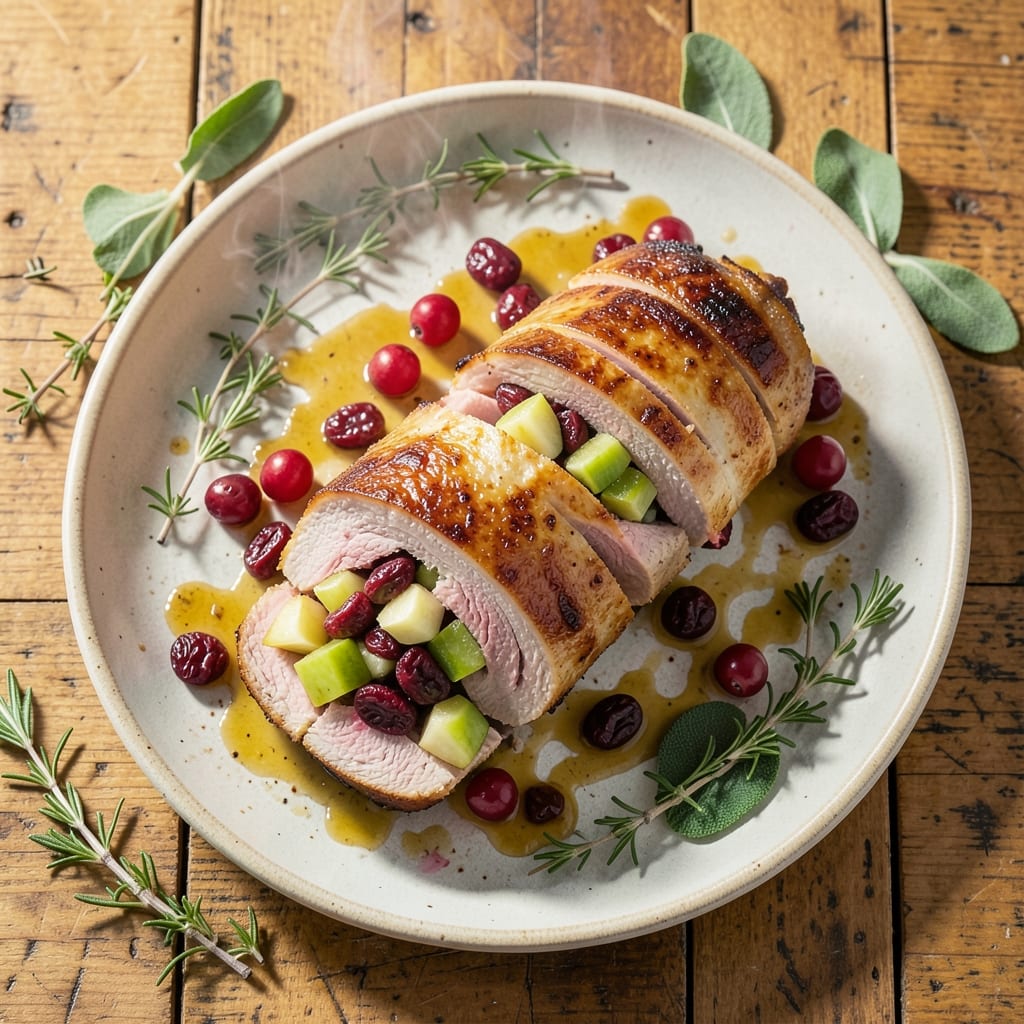
This apple cranberry stuffed pork tenderloin recipe transforms simple ingredients into a showstopping centerpiece that balances sweet-tart filling with perfectly tender, juicy meat. After years of perfecting pork techniques—from my CIA training to weekly prep at The Smoky Pig—I've developed a method that guarantees the stuffing stays moist while the pork achieves that ideal pink center. The secret? A precise cut lengthwise to create room for the filling without overstuffing.
What makes this dish special is how the flavors come together: honey-glazed apples and tart cranberries caramelize into a sticky, aromatic filling that contrasts beautifully with the savory pork. I use a mix of dried and fresh cranberries for texture, plus a touch of Dijon mustard to bridge the sweet and savory. The recipe delivers restaurant-quality results in about 45 minutes of active prep time, with most of the work happening while you roast.
By the time it emerges from the oven, you'll have a golden-brown tenderloin with a glistening stuffing peeking through the cut, promising bursts of apple and cranberry in every bite. The pork stays impossibly moist thanks to a simple brining technique, while the filling achieves that perfect balance between sweet and tart. This is the kind of dish that elevates weeknight dinners into special occasions without requiring hours in the kitchen.
Pair it with roasted garlic mashed potatoes or a crisp green salad to round out the meal. The stuffing's sweetness also makes it a crowd-pleaser for holiday gatherings—just scale the recipe up if needed. Let's get started on creating this perfect balance of textures and flavors.
Ingredients for apple cranberry stuffed pork tenderloin
The perfect balance of sweet-tart filling and perfectly tender pork starts with these quality ingredients.
| Ingredient | Amount | Notes |
|---|---|---|
| Pork Tenderloin 🥩 | 1 ½ lb | Center-cut, trimmed of fat |
| Granny Smith Apples 🍎 | 1 medium | Peeled, cored, diced small |
| Dried Cranberries 🍇 | ½ cup | Chopped if large pieces |
| Fresh Cranberries 🍇 | ¼ cup | Chopped, not dried |
| Honey 🍯 | 2 tbsp | Wildflower preferred |
| Dijon Mustard 🍯 | 1 tbsp | High-quality for balance |
| Unsalted Butter 🧈 | 2 tbsp | Cold, cubed for filling |
| Fresh Thyme Leaves 🌿 | ¼ cup | Chopped, stems removed |
| Garlic Cloves 🧄 | 2 cloves | Minced, for brining |
| Kosher Salt 🧂 | 1 ½ tsp | Diamond Crystal preferred |
| Black Peppercorns 🌶️ | ½ tsp | Freshly cracked |
| Olive Oil 🫒 | 1 tbsp | Extra-virgin for brining |
| Apple Cider Vinegar 🍎 | 1 tbsp | For brining acidity |
| Fresh Rosemary 🌿 | ½ tsp | Chopped, for garnish |
The pork tenderloin is non-negotiable—look for a center-cut piece with even diameter. Whole Foods or your local butcher will have the best quality, but avoid anything with grayish edges. Granny Smith apples are ideal for their tartness, but Fuji or Honeycrisp work too. The dried and fresh cranberries create that perfect texture contrast—Trader Joe's has great pre-chopped options, but whole berries are easier to handle. For the filling, Dijon mustard is essential; Maille or Grey Poupon add depth without overpowering.
No Granny Smith apples? Braeburn or Pink Lady are close seconds. Substituting dried cranberries? Use 100% pure dried cranberries with no added sugar—the sweetened kind will throw off the balance. Fresh cranberries hard to find? Substitute with chopped dried apricots at half the amount, but expect a different flavor profile. The honey should be raw or wildflower for floral notes, though regular works in a pinch. For the brining, Diamond Crystal kosher saltTable salt at 75% the amount, but taste as you go.
Prep the filling ahead and store it in an airtight container for up to 2 days—the flavors meld beautifully. The brined pork can sit in the fridge for 4-6 hours or overnight, but no longer. After roasting, the stuffed tenderloin reheats well—350°F for 10 minutes covered with foil. For holiday gatherings, double the recipe and use a 9x13-inch baking dish to keep everything organized. The stuffing can be prepped 24 hours ahead, but assemble the pork just before roasting for the best texture.
Why You'll Love This Recipe
- Minimal Prep, Big Payoff: I swear by this recipe when I’m too tired to chop much—just slice the apples and toss in the cranberries. The pork tenderloin stays juicy while the stuffing caramelizes, and honestly? The hardest part is deciding when to pull it out of the oven.
- Sweet-Savory Magic: That combo of tart Granny Smith apples, chewy dried cranberries, and fresh cranberries with a drizzle of honey? It’s the kind of flavor that makes you go back for seconds without even trying. The pork soaks up all the juices, so every bite is packed with depth.
- Weeknight to Holiday: Between us, this is my secret weapon for dinner parties and lazy Tuesdays. Serve it sliced with mashed potatoes for a cozy meal, or platter it with crusty bread for guests—it’s fancy enough to impress but simple enough to make when you’re not feeling it.
- Leftovers That Don’t Suck: Most stuffed pork dries out after reheating, but this? It’s still moist the next day. I’ll often slice the leftovers for sandwiches or toss them into a salad—because let’s be real, you’re not going to eat all of it in one sitting anyway.
Step-by-step instructions for apple cranberry stuffed pork tenderloin
Here's the precise method for achieving a perfectly tender, juicy pork tenderloin with a harmonious sweet-savory filling.
Prepare the Stuffing and Season the Pork
In a medium bowl, combine the diced Granny Smith apples, dried cranberries, fresh cranberries, Dijon mustard, chopped fresh sage, chopped fresh thyme, and 1 teaspoon of the kosher salt. Mix gently with a wooden spoon until evenly distributed. The tartness of the cranberries and apples will complement the pork beautifully, while the herbs add depth.
Pat the pork tenderloin dry completely with paper towels—this is critical for achieving a crisp exterior. In a small bowl, whisk together the minced garlic cloves, remaining ½ teaspoon kosher salt, and freshly ground black pepper. Rub this mixture all over the pork, pressing gently to ensure even coverage. Let the pork sit at room temperature for 15 minutes while you prepare the stuffing.
Stuff and Secure the Pork
Preheat your oven to 425°F. Using a sharp knife, make a shallow vertical cut down the center of the pork tenderloin, stopping about ½ inch from the bottom. This creates a pocket without cutting through completely. Gently open the pocket and stuff it with the apple-cranberry mixture, pressing lightly to compact the filling. The stuffing should be snug but not forced.
Secure the cut edges with kitchen twine, tying it every 1-2 inches to prevent the stuffing from spilling out during cooking. Tie the ends tightly to form a neat package. Brush the exterior generously with the extra-virgin olive oil, which will help create a golden-brown crust and enhance the flavor.
Roast Until Internal Temperature Reaches 145°F
Place the stuffed pork tenderloin on a wire rack set inside a rimmed baking sheet. This allows air to circulate underneath, ensuring even cooking. Roast in the preheated oven for 25-30 minutes, until the internal temperature reaches 145°F when measured with a meat thermometer. The pork should have a deep golden-brown color and the stuffing should be visibly caramelized.
Real talk: Don't rely solely on time—every oven runs differently. The 145°F internal temperature is your true indicator of doneness. If the exterior browns too quickly, tent the pork loosely with aluminum foil to prevent over-browning while it continues cooking.
Rest and Glaze for Maximum Juiciness
Remove the pork from the oven and transfer it to a cutting board. Let it rest for 10-15 minutes before slicing. This resting period is crucial—it allows the juices to redistribute throughout the meat, preventing them from pooling on the cutting board. During this time, melt the unsalted butter in a small saucepan over low heat and whisk in the balsamic vinegar and remaining 2 tablespoons honey.
Simmer the glaze for 2-3 minutes until slightly thickened. Brush this mixture generously over the pork just before serving. The balsamic and honey combination adds a beautiful contrast to the savory stuffing, tying all the flavors together in each bite.
Slice and Serve with Confidence
Once rested, carefully remove the twine and slice the pork into ½-inch thick medallions. The stuffing should be visible through the cuts, indicating even distribution. Serve immediately with the glaze drizzled over the top and any accumulated pan juices spooned alongside. Each slice should be perfectly tender with a juicy center and a crisp exterior.
This method guarantees a pork tenderloin that stays incredibly juicy throughout, with a sweet-savory stuffing that complements rather than overpowers the meat. The key is in the precise timing, proper resting, and that final glaze—don't skip any of these steps if you want that restaurant-quality result at home.
Pro Tips For Making Apple Cranberry Stuffed Pork Tenderloin
- Sear the Pork First: The stuffed filling won’t stick if the meat’s cold—pat the tenderloin dry, then sear it skin-side down in a hot pan for 3-4 minutes before stuffing. This locks in juices and gives the crust a head start.
- Core Apples Like a Pro: Granny Smiths stay crispest when you remove the core in one clean slice (not chunks) and peel just the bruised spots—no need to strip the skin. Toss them in lemon water while prepping to keep them bright.
- Balance Moisture in Stuffing: Mix dried cranberries with fresh ones (about 1:1 ratio) and toss with a splash of honey before stuffing—this prevents the filling from turning mushy while roasting. Skip the dried-only approach unless you want a chewy surprise.
- Rest Before Slicing: Let the stuffed pork sit wrapped in foil for 5-10 minutes after roasting—yes, even if you’re starving. Cutting too soon leaks juices, and the apples will ooze out like a sad filling. (Your future self will notice.)
Troubleshooting great apple cranberry stuffed pork tenderloin
Stuffing Leaking
If the filling escapes during roasting, you likely overstuffed the pocket. I’ve seen this happen when the cut isn’t deep enough or the twine isn’t tight enough. Start with a shallow vertical cut (about ½ inch deep) and use heavy-duty butcher’s twine—I swear by Jiffy Twist—to secure it every 1-2 inches. For extra insurance, place a small piece of parchment paper under the stuffed pork on the rack to catch any escaped filling. 🌟
Pork Too Dry
Dry pork usually means it cooked too long or wasn’t brined properly. First, never skip the resting time—those 10-15 minutes are non-negotiable for juices to redistribute. Second, if you’re short on time, try a quick brine: Dissolve 1 tbsp kosher salt in 1 cup warm water and submerge the pork for 30 minutes before cooking. For reheating, wrap the pork in foil and bake at 325°F for 10 minutes with a splash of apple cider to restore moisture.
Stuffing Undercooked
The filling needs to reach 165°F internally to be safe, but it often stays cooler than the pork. If the center looks pale, return the pork to the oven for 5-10 minutes (covered loosely with foil) until the stuffing caramelizes slightly. Pro tip: Add ½ tsp cinnamon to the filling—it not only enhances flavor but also helps the apples soften faster. For extra insurance, I sometimes par-cook the filling for 5 minutes in the microwave before stuffing it into the pork. 🔥
Uneven Cooking
If one side cooks faster than the other, your oven’s heat isn’t distributing evenly. Rotate the pork halfway through cooking (after 15 minutes) for even browning. For stubborn hot spots, use a light-colored baking sheet—dark pans can cause uneven heating. If your oven runs hot, lower the temperature to 400°F and add 5 minutes to the cook time. I’ve also had success using a wire rack on a baking sheet to allow air circulation underneath.
Filling Too Sweet
If the cranberry-apple combo overpowers the pork, balance it with 1 tsp fresh lemon juice or ½ tsp smoked paprika in the filling. For a tangier profile, swap ½ cup of the dried cranberries for fresh cranberries (they’re more tart). I also like adding 1 tsp chopped walnuts for crunch and depth—it cuts through the sweetness beautifully. Adjust the honey to 1 tbsp if you prefer a more subtle sweetness. 💫
Nutrition facts
Frequently asked questions
Can I make this recipe with a smaller or larger pork tenderloin?
This recipe works best with a 1.5 lb center-cut tenderloin for perfect stuffing distribution. For a 1 lb tenderloin, reduce the filling by 25%—skip the fresh cranberries or halve the dried ones. For larger cuts (2 lb), increase filling by 30% and extend roasting time by 5-7 minutes. Always aim for a ½-inch thick stuffing layer to avoid overfilling.
What's the best way to reheat leftovers?
Wrap the stuffed pork in foil and reheat at 325°F for 10-15 minutes until warmed through. For extra moisture, add 2 tbsp apple cider to the foil before sealing. Slice and serve immediately—the stuffing reheats best when fresh. Leftovers keep for 3 days in the fridge or 3 months frozen.
Can I prepare the stuffing ahead of time?
Mix the filling ingredients 1 day ahead and store in an airtight container. The flavors meld beautifully overnight. For best texture, stuff the pork just before roasting. If prepping for a crowd, assemble the stuffed tenderloin 2 hours ahead and refrigerate—add 5-7 minutes to roasting time.
What wine pairs best with this dish?
A medium-bodied red like Pinot Noir or Merlot complements the sweet-tart filling beautifully. For white wine lovers, try a crisp Chardonnay with 10-12% acidity. The cranberry notes also pair well with dry Riesling. Serve slightly chilled (55-60°F) to balance the dish's richness.
How do I adjust this for a holiday crowd?
Double the recipe and use a 9x13-inch baking dish to keep everything organized. For 8 servings, use 3 lb pork and 2 cups filling. Roast at 400°F for 35-40 minutes (cover with foil after 20 minutes if browning too fast). Prep the filling 2 days ahead and store components separately.