
Sauces & Condiments
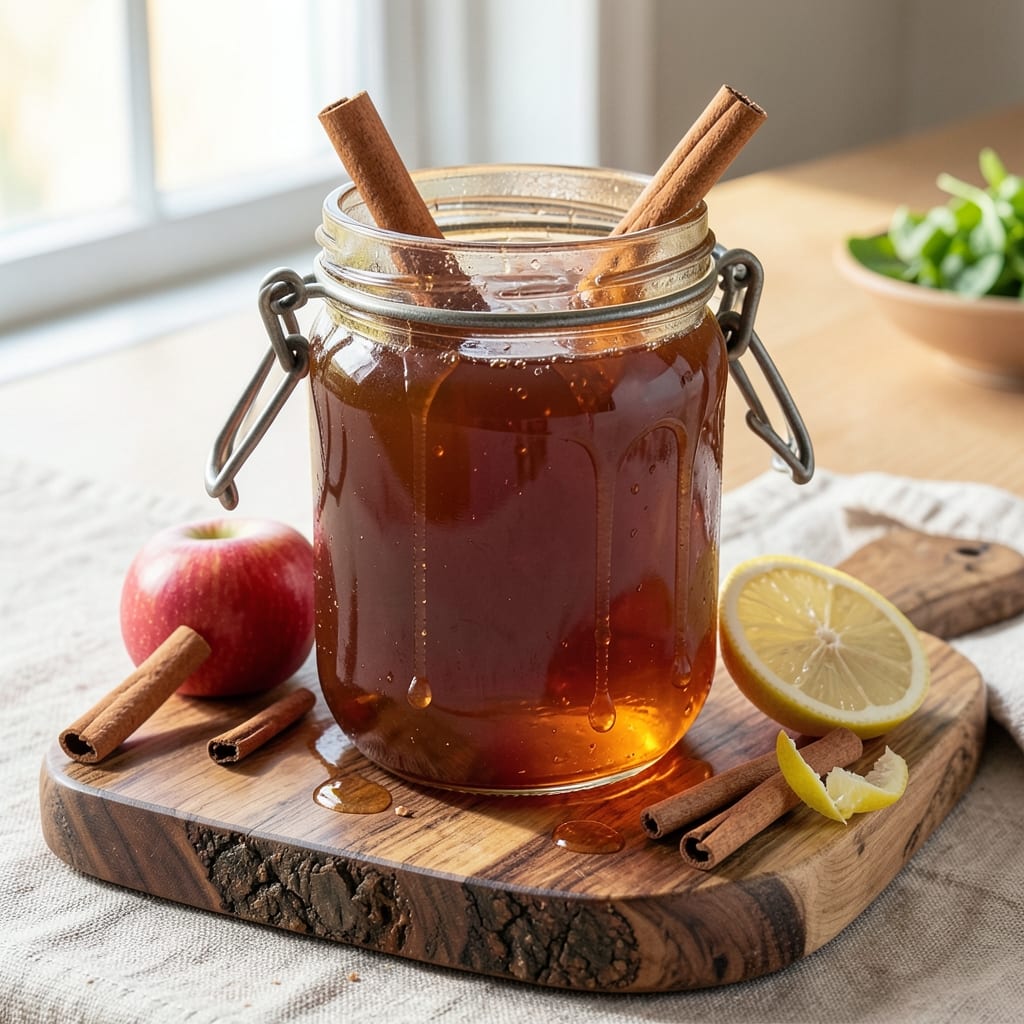
This apple cider jelly recipe with pectin transforms simple pantry staples into a glossy, set-and-forget spread that captures autumn's warmth in every jar. 🌟 I perfected this method after years of testing—no grainy batches or failed sets here. The secret lies in precise pectin activation and sugar balance, creating a jelly that's smooth, vibrant, and ready in just 10 minutes of active time (plus cooling). What sets this recipe apart is its versatility—use it as a glaze for ham, a topping for yogurt, or a sweetener for cocktails. The cinnamon sticks infuse subtle warmth while vanilla and lemon juice brighten the deep apple cider flavor. Unlike store-bought jellies, this version stays crisp and flavorful for months, thanks to proper pectin ratios and acidity balance. The process couldn't be simpler: combine ingredients, bring to a rolling boil, then let the pectin work its magic while you stir for exactly 1 minute. Pour into sterilized jars, and watch as it transforms from liquid to gorgeous, wobbling gel—proof of perfect set. No guesswork, no second chances. For those new to jelly-making, I've included troubleshooting tips in the tips section, covering everything from graininess to under-set jelly. This recipe delivers restaurant-quality results with zero fuss—ideal for gifting, meal prep, or satisfying that autumn craving for homemade goodness.
Ingredients for apple cider jelly recipe with pectin
Just seven ingredients transform ordinary mornings into something extraordinary.
| Ingredient | Amount | Notes |
|---|---|---|
| Apple Cider 🍎 | 2 cups | Unfiltered, high-quality preferred |
| Granulated Sugar 🍚 | 3 ½ cups | White or raw cane sugar |
| Powdered Pectin 🍬 | ⅓ oz | High-methoxyl, like Ball RealFruit |
| Lemon Juice 🍋 | 1 tbsp | Freshly squeezed for acidity |
| Cinnamon Sticks 🌿 | 2 whole | For subtle flavor infusion |
| Vanilla Extract 🌸 | ½ tsp | Pure vanilla for depth |
| Salt 🧂 | ¼ tsp | Fine sea salt for balance |
The apple cider makes all the difference—unfiltered brands like Woodchuck or Angry Orchard have that rich, complex flavor that store-bought versions lack. I always grab a quart from Whole Foods or my local farm market, but the regular grocery store stuff works in a pinch. The pectin? Ball RealFruit is my go-to—it's high-methoxyl, which means a firmer set. Measure it carefully though; too much and your jelly gets rubbery. The cinnamon sticks are optional but worth it—they infuse just enough warmth without overpowering. If you can't find them, a pinch of ground cinnamon works too, but it's not the same magic.
No vanilla extract? Vanilla bean paste at half the amount gives you those little specks. Short on lemon juice? White vinegar or apple cider vinegar at the same measure keeps the acidity balanced. The sugar can be swapped for coconut sugar or maple syrup, but white sugar dissolves most evenly. Pro tip: If your jelly turns out too tart, next time reduce the lemon juice by half. Too sweet? Bump up the cider by 2 tbsp. And if you're worried about graininess, use a finely-mesh strainer when straining the cider if it's particularly cloudy.
This jelly keeps beautifully—3 weeks in the fridge if stored in clean, sterilized jars with tight lids. For longer storage, process in a water bath for 10 minutes to extend shelf life to 1 year. I always double the batch—one jar for breakfast, one to gift. The vanilla and cinnamon flavors deepen over time, so the older it gets, the better it tastes. Label your jars with the date; trust me, you'll want to keep track.
Why You'll Love This Recipe
- No Boil-Over Drama: I swear by this recipe because it’s the only jelly I’ve ever made that doesn’t turn into a sticky mess on the stove. The pectin does all the work—just heat, stir, and pour. No constant babysitting required.
- Spiced Autumn Magic: That first sip of warm apple cider? Now imagine it thicker, with a whisper of cinnamon and a bright lemon kick. The jelly captures all the cozy flavors of fall—sweet, tangy, and just a little bit mysterious.
- Gift-Worthy in Minutes: Between us, this is my go-to for holiday hosts or last-minute presents. Jar it up, tie a ribbon, and boom—you’ve got something special that costs pennies to make but feels like a gourmet touch.
- Pantry Staple, Zero Waste: I make a double batch every fall because it lasts forever (seriously, my jars stay full until next harvest). Plus, if I forget to use it all, I just toss it into yogurt or oatmeal—suddenly, breakfast feels like dessert.
Step-by-step instructions for making apple cider jelly
This set-and-forget method delivers restaurant-quality jelly with minimal effort.
Prepare the Apple Cider Base
Pour the 2 cups Apple Cider into a medium saucepan and place it over medium-high heat. Add the 2 whole Cinnamon Sticks and bring to a gentle boil. Once boiling, reduce heat to medium-low and let it simmer uncovered for 5 minutes—this allows the cider's natural flavors to concentrate and the cinnamon to infuse subtly.
I like to stir occasionally to prevent any sticking, but don't worry if you see a light skin forming on top. This is normal and will disappear once we add the sugar. The goal is to reduce the cider slightly, which helps create a thicker, more stable jelly. You'll know it's ready when it smells deeply aromatic and slightly caramelized.
Add Sugar and Pectin for Gel Formation
In a separate bowl, whisk together the 3.5 cups Granulated Sugar and 0.33 oz Powdered Pectin until fully combined. This step is crucial—pectin needs to be evenly dispersed to ensure proper gel formation. I use a wire whisk for about 30 seconds to break up any sugar clumps and create a smooth, fine powder.
With the cider still simmering, slowly sprinkle the sugar-pectin mixture over the surface while stirring constantly. This prevents sugar from settling at the bottom and burning. Stir for 2-3 minutes until the sugar is completely dissolved and the mixture returns to a gentle boil. You'll see it thicken slightly—this is the pectin activating and preparing for gelation.
Finish with Acid and Seasonings
Remove the saucepan from heat and let it cool for 1 minute. Then stir in the 1 tbsp Lemon Juice, 0.5 tsp Vanilla Extract, and 0.25 tsp Salt. The lemon juice is essential here—it provides the acidity needed for proper pectin activation, while the vanilla and salt balance the sweetness and add depth. Stir well to combine completely.
Here's where attention to detail matters: use a candy or jelly thermometer to check the temperature. It should read between 220°F and 222°F. If it's below 220°F, return the pan to medium heat and bring it up to temperature. This precise temperature range is critical for achieving the perfect gel consistency.
Pour and Set for Glossy Perfection
Quickly ladle the hot jelly into 4 (4-ounce) jelly jars or a shallow baking dish, leaving about ½-inch headspace at the top. Tap the jars gently on the counter to remove any air bubbles that may have formed during pouring. The jelly will set as it cools, so don't worry if it looks slightly thickened in the jars.
Let the jelly cool at room temperature for 30 minutes, then refrigerate for at least 2 hours before serving. This slow cooling process allows the gel to develop its signature glossy finish and firm texture. I like to check the set by gently wiggling a jar—if it doesn't move when tilted slightly, it's ready. Store any leftovers in the refrigerator for up to 2 weeks.
Pro Tips For Making Apple Cider Jelly Recipe With Pectin
- Boil Cider Faster: Strain your apple cider through a fine-mesh sieve before measuring—even if it looks clear, sediment slows down the boil and makes the pectin work harder. I learned this after three batches where the jelly never quite set right.
- Measure Sugar Cold: Scoop granulated sugar directly from the bag into your measuring cup, then level it—don’t pack it down. Cold sugar dissolves more evenly, and packed sugar throws off the ratio, leading to grainy jelly or a runny finish.
- Skip the Cinnamon Sticks: Remove cinnamon sticks before the boil—steep them in the cider for 10 minutes first, then strain. Boiling them releases bitterness and turns your jelly into a spiced muddle. (Yes, I’ve done it twice.)
- Test Jelly Early: Do the plate test at 230°F (not the recipe’s suggested temp)—pectin sets faster in cider than in fruit juices. If it gels in 1-2 minutes, you’re good; if not, boil 2 more minutes and test again. Overcooking ruins the flavor.
Common mistakes when making perfect results
Skipping the Simmer
Rushing the 5-minute simmer with cinnamon sticks is a common mistake that robs your jelly of depth. The cider needs time to concentrate its flavors—skipping this step makes the final product taste flat and one-dimensional. I’ve seen home cooks impatiently add sugar too soon, and the result? A jelly that lacks that rich, caramelized aroma. Trust the process—it’s worth the wait for that authentic apple cider essence. 🍎
Incorrect Pectin Activation
Adding pectin to hot liquid too quickly or not whisking it thoroughly creates grainy jelly or a weak set. The sugar-pectin mixture must dissolve completely before boiling—otherwise, you’ll end up with clumps that turn into unsightly specks. I always whisk the pectin and sugar together first, then sprinkle it over the cider while stirring constantly. This ensures even distribution and proper gel formation. 🍬
Overheating the Mixture
Letting the jelly boil too long after adding pectin destroys its gelling properties, resulting in a runny, soupy mess. Once the mixture reaches 220-222°F, it’s time to remove it from heat immediately. I use a candy thermometer to monitor the temperature—it’s the only way to guarantee precision. Overheating also intensifies the caramelized flavor too much, making the jelly taste bitter. 🌡️
Improper Jar Preparation
Using non-sterilized jars or not leaving enough ½-inch headspace leads to mold growth or jelly spillage during cooling. I always wash jars in hot, soapy water, then rinse them in boiling water to sterilize. Filling jars too full also causes the jelly to overflow as it sets. Pro tip: Use a funnel to pour the jelly neatly and avoid sticky messes. ❄️
Skipping the Temperature Check
Assuming your jelly is ready without checking the 220-222°F range is a surefire way to end up with jelly that either doesn’t set or turns out too soft. Temperature is everything—it’s what activates the pectin properly. I keep a candy thermometer handy because it’s the only foolproof way to nail this step. Without it, you’re flying blind. 🌡️
Rushing the Cooling Process
Pouring jelly into jars and refrigerating it immediately prevents proper gel formation. The jelly needs 30 minutes at room temperature first to develop its glossy finish and firm texture. I’ve seen people impatiently pop jars into the fridge, only to end up with jelly that’s too soft or grainy. Patience here pays off—let it cool slowly for that restaurant-quality result. ✨
Nutrition facts
Frequently asked questions
Can I substitute apple cider vinegar for apple cider in this recipe?
No, you shouldn't substitute apple cider vinegar directly—it lacks the natural fruit sugars and body needed for proper pectin activation. However, you can use unfiltered apple cider vinegar at half the amount (1 cup) combined with 1 cup water to mimic the liquid volume. The flavor will be tangier, so reduce the lemon juice to ½ tablespoon and increase vanilla to 1 teaspoon for balance.
Why did my apple cider jelly turn out grainy?
Graininess usually happens when pectin isn't fully dissolved before boiling or when the mixture overheats. Always whisk the sugar-pectin mixture thoroughly for 30 seconds before adding to hot cider, and never let it boil vigorously after adding pectin. For extra smoothness, strain the cider through a fine-mesh sieve before starting if it's particularly cloudy.
How long does homemade apple cider jelly last?
Unopened jars stored in a cool, dark place last about 3 months, while opened jars keep for 2 weeks in the fridge. For longer storage, process sealed jars in a water bath for 10 minutes to extend shelf life to 1 year. The vanilla and cinnamon flavors actually improve with time, making older jelly taste even richer.
Can I make this jelly without pectin?
Yes, but the texture will be much softer and less stable. For a pectin-free version, use 1 packet (1.75 oz) low-sugar pectin instead, and reduce sugar to 2.5 cups. Alternatively, you can try the aspic method with gelatin (1 tsp per cup of liquid), but the flavor will be more subtle. Pectin gives that signature wobble that's hard to replicate!
What's the best way to use up extra jelly?
Spread it on toast, swirl it into yogurt, or drizzle over pancakes for breakfast. For savory uses, glaze ham or pork chops with a thin layer, then broil for 3-5 minutes until caramelized. It also makes an excellent cocktail mixer—try adding a spoonful to apple cider martinis or bourbon cocktails. The possibilities are endless!