
Sauces & Condiments
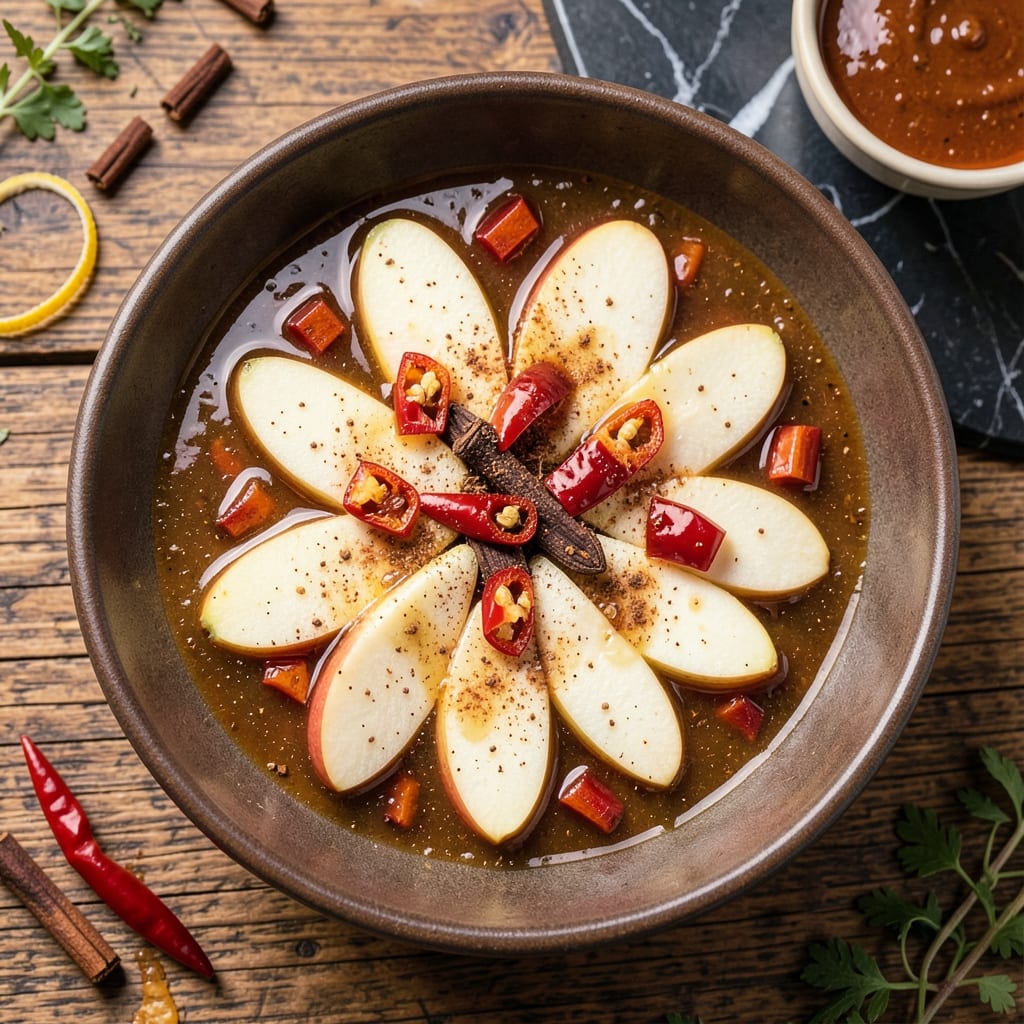
This apple chili sauce recipe transforms humble pantry staples into a versatile condiment that bridges sweet and spicy flavors with effortless harmony. The secret lies in simmering apples with chili peppers, vinegar, and warm spices until they meld into a glossy, balanced sauce—no fancy techniques required. What starts as a simple combination of tart apples and fiery chilies evolves into something far more complex through slow reduction, creating layers of depth that work equally well as a dipping sauce, glaze, or marinade component.
The beauty of this sauce is its adaptability—it works with everything from crispy fried chicken to roasted vegetables, adding a bright contrast to rich, savory dishes. A touch of cinnamon and cloves adds warmth, while the vinegar cuts through the natural sweetness of the apples, creating a perfect equilibrium. The sauce thickens as it cooks, achieving that ideal consistency for drizzling without being overly syrupy.
What you’ll end up with is a versatile, restaurant-quality condiment that elevates any dish it touches. The apples soften into a velvety texture, the chilies add just the right amount of heat, and the spices tie everything together in a way that’s both comforting and exciting. Best of all, it keeps beautifully in the refrigerator for up to two weeks, making it perfect for meal prep or gifting.
Whether you’re drizzling it over tacos, brushing it onto grilled meats, or serving it as a dip for spring rolls, this apple chili sauce delivers bold flavor with minimal effort. Ready to make it? The ingredients list is simple, and the process is straightforward—just follow along for a sauce that will become a staple in your kitchen.
Ingredients for apple chili sauce
Ten simple ingredients create a sauce that's bold, balanced, and ready to elevate everything from tacos to roasted veggies.
| Ingredient | Amount | Notes |
|---|---|---|
| Apples 🍎 | 2 lbs | Tart variety like Granny Smith |
| Red Chili Peppers 🌶️ | 4 whole | Fresh, like jalapeño or serrano |
| Apple Cider Vinegar 🍏 | ½ cup | For tangy brightness |
| Granulated Sugar 🍚 | ½ cup | Balances tartness |
| Ground Cinnamon 🌿 | 1 tsp | Warmth without overpowering |
| Ground Cloves 🌿 | ¼ tsp | Deep aromatic punch |
| Salt 🧂 | 1 tsp | Kosher or sea salt |
| Olive Oil 🫒 | 2 tbsp | For glossy finish |
| Garlic Cloves 🧄 | 2 cloves | Minced for subtle depth |
| Fresh Ginger 🌿 | 1 tbsp | Grated, for zing |
The apples are the heart of this sauce—Granny Smith or Fuji work best for that perfect tartness. Trader Joe's or Whole Foods usually have pre-sliced apples in the salad section, but a whole apple lasts longer. If you're using fresh chilies, look for ones with vibrant color and firm texture—they should have a slight give when squeezed. Mexican markets often carry the freshest jalapeños or serranos, but the grocery store works too. For the vinegar, Bragg or Texas Pete add a nice depth of flavor, but any apple cider vinegar will do.
No fresh chilies? Red pepper flakes or cayenne (1/4 tsp) will give you heat, though it won't be as bright. Swap the Granny Smith apples for green apples or pears if that's what you have—they'll still work, though the flavor profile shifts slightly. Running out of cloves? Allspice or nutmeg at half the amount keeps the warmth. The ginger can be subbed with a pinch of ground ginger, but fresh is worth the extra minute. And if you're worried about the sugar feeling too sweet, reduce it to 1/4 cup—the apples' natural sweetness will still shine through.
This sauce tastes even better the next day as the flavors meld. Store it in a glass jar in the fridge for up to 2 weeks, or freeze it for 3 months in ice cube trays for single-serving portions. I like to make a big batch and keep it in the fridge—it's perfect for quick weeknight dinners. If it thickens too much, just add a splash of water or vinegar to loosen it up. The leftovers make an amazing glaze for roasted carrots or a dip for spring rolls.
Why You'll Love This Recipe
- Pantry Magic: I swear, this sauce comes together with stuff I already had—no special shopping needed. Toss in a few apples, a handful of dried chilies, and a splash of vinegar, and boom—something that tastes like it simmered all day.
- Sweet Heat Balance: Between us, that cinnamon and sugar combo with the chili peppers is chef’s kiss. It’s tangy, it’s sweet, it’s got a little kick—like a hug for your taste buds when you least expect it.
- Game for Any Meal: Drizzle it over grilled chicken, toss it with rice, or—here’s what sold me—use it as a glaze for roasted veggies. Even my picky teen asked for seconds when I served it with fries. (Yes, even on a Tuesday night.)
- Lasts All Week: Honestly, I make a big batch and it’s still good after five days. The vinegar keeps it from spoiling, and the sugar balances the acidity so it doesn’t turn weird. Plus, it’s cheap—way cheaper than store-bought sauces, and way better.
Step-by-step instructions for apple chili sauce
Here's how to create a perfectly balanced sauce that's sweet, spicy, and tangy every time.
🍳 Step 1: Cook the Apples Until Soft
Core and peel the 2 lbs apples, then cut them into ½-inch chunks. Heat the 2 tbsp olive oil in a large saucepan over medium heat until shimmering. Add the apple chunks and cook for 5-7 minutes until they begin to soften slightly and release their juices.
This initial cooking step prevents the apples from turning mushy later. You'll know they're ready when they release their juice and smell sweetly aromatic. Stir occasionally to ensure even browning on all sides. Don't rush this step—properly cooked apples create a thicker, more flavorful sauce.
🔥 Step 2: Build the Flavor Base with Chili and Aromatics
Add the 4 whole red chili peppers (seeds removed if you prefer less heat) to the pan. Cook for 3-4 minutes until they begin to soften and the chili oil becomes fragrant. Add the 2 cloves minced garlic and 1 tbsp grated fresh ginger, cooking for another 1 minute until the garlic turns golden and the ginger becomes aromatic.
The peppers should soften but not break down completely—you want them to infuse their flavor without becoming mushy. Here's where it gets good: the combination of chili, garlic, and ginger creates that perfect sweet-spicy balance. Stir frequently to prevent burning, especially the garlic which can scorch in seconds.
🥘 Step 3: Simmer with Vinegar and Spices
Pour in the 0.5 cup apple cider vinegar and 0.5 cup granulated sugar, stirring to combine. Add the 1 tsp ground cinnamon, 0.25 tsp ground cloves, and 1 tsp salt. Bring the mixture to a boil, then reduce heat to low-medium and let it simmer uncovered for 15-20 minutes until the apples break down and the sauce thickens.
This is where the magic happens—the vinegar adds tangy brightness while the sugar balances the heat. The spices infuse deeply during this simmering time, creating that warm, aromatic depth. Stir occasionally to prevent sticking, and watch for the sauce to reduce by about ⅓—it should coat the back of a spoon but still be pourable.
🔪 Step 4: Blend and Strain for Silky Texture
Using an immersion blender, blend the sauce directly in the pan until completely smooth. If you prefer a chunkier texture, mash the apples with a potato masher instead. Transfer the sauce to a fine-mesh strainer lined with cheesecloth and strain into a clean bowl, pressing gently on the solids to extract all the flavorful liquid.
Straining removes any fibrous apple bits and peppers, giving you that silky, restaurant-quality texture. The cheesecloth catches any remaining seeds or skins, ensuring your sauce is perfectly smooth. Here's a pro tip: don't press too hard on the solids or you'll extract bitter compounds from the pepper skins.
⏰ Step 5: Adjust Consistency and Flavor
Taste the sauce and adjust the balance as needed. For more sweetness, add 1-2 teaspoons granulated sugar at a time. For more heat, add ½ teaspoon cayenne pepper or a pinch of red pepper flakes. For tang, add 1-2 teaspoons apple cider vinegar. Thin with 1-2 tablespoons water if needed to reach your desired consistency.
This final adjustment is crucial—every apple and chili pepper has different natural sweetness and heat levels. The sauce should be perfectly balanced with equal parts sweet, spicy, and tangy flavors. Let it cool to room temperature before serving, as the flavors continue to meld and develop during this time. Store in an airtight container in the refrigerator for up to 2 weeks.
Pro Tips For Making Apple Chili Sauce
- Simmer Low and Slow: This sauce isn’t a race—drop the heat to medium-low once it starts bubbling. I used to rush it, and the apples turned to mush while the chili lost its snap. Let it work for 20-25 minutes, stirring occasionally, until the apples soften but still hold shape. Patience here keeps the texture bright and the flavors balanced.
- Peel and Core Apples: Skip the skins if you want a smoother sauce, but save the cores for stock instead of tossing them. I learned this the hard way after making a second batch just to salvage the scraps. The flesh near the core is tougher and breaks down unevenly, so prepping them properly cuts down on grittiness.
- Balance Vinegar Gradually: Don’t dump all the apple cider vinegar at once—add half first, taste, then adjust. The acidity cuts through the sweetness, but too much upfront can make the sauce taste harsh. I was skeptical until I tried it: adding it in stages lets you dial in the tang without overpowering the chili’s heat or the apples’ natural sweetness.
- Toast the Chili First: Dry-toast the red chili peppers in a separate pan for 30 seconds per side before adding them to the sauce. This deepens their flavor without scorching them—something I only figured out after burning two batches. The aroma alone makes the sauce taste more complex, and it prevents a bitter aftertaste that ruins the balance.
Regional styles of apple chili sauce
Asian-Inspired Sweet Heat
In many Asian cultures, apple chili sauce takes on a vibrant, umami-rich profile. I love using 1 tbsp soy sauce and 1 tsp sesame oil during the simmering stage to deepen the flavor. Add 1-inch fresh ginger and 2 cloves garlic for extra zing. This version pairs beautifully with spring rolls, dumplings, or grilled pork. The key is balancing the sweetness with 1 tsp fish sauce at the end for that authentic Asian touch. 🌶️
Southern U.S. Twist
Down South, apple chili sauce often gets a smoky, molasses-infused makeover. After simmering the apples, stir in 2 tbsp molasses and 1 tsp smoked paprika for a rich, caramel-like depth. Serve it as a glaze for fried chicken or pork chops—the molasses adds a deep, almost butterscotch note that complements the heat. I like to finish with a pinch of black pepper for extra warmth. This version is a crowd-pleaser at BBQ joints! 🔥
Mexican Street Food Style
For a bold, tangy kick, Mexican street vendors often use tomato sauce and lime juice in their apple chili sauces. After blending, stir in ½ cup tomato sauce and 2 tbsp lime juice to brighten the flavors. Top with chopped cilantro and a sprinkle of cotija cheese for a fresh, zesty contrast. This sauce is perfect for tacos, nachos, or as a dip for totopos. The lime juice cuts through the sweetness while the tomato adds a savory depth. 🌮
British Colonial Fusion
The British colonial influence brings a touch of apple cider and mustard to the mix. After simmering, whisk in 2 tbsp apple cider and 1 tsp Dijon mustard for a tangy, slightly sharp twist. This version works wonderfully with roasted meats, game birds, or even as a condiment for fish and chips. The mustard adds complexity, while the cider enhances the apple’s natural sweetness. It’s a unique blend that feels both nostalgic and fresh. 🍏
Modern Fusion Experiment
For a contemporary take, I like to blend in 1 tbsp honey and ½ tsp cardamom during the simmer. This fusion adds a floral, slightly floral note that pairs beautifully with Middle Eastern grilled meats or Mediterranean dishes. The honey balances the acidity of the vinegar, while the cardamom adds an exotic touch. It’s a great way to elevate simple dishes like kebabs or falafel with a modern twist. ✨
Nutrition facts
Frequently asked questions
Can I use cooked apples instead of fresh for this sauce?
Yes, but the texture will be slightly different. Use 1 cup cooked applesauce (unsweetened) as a substitute for 2 lbs fresh apples, but reduce the sugar to ¼ cup since applesauce is already sweet. The sauce will be smoother but may lack the depth from cooking fresh apples. For best results, stick with fresh apples when possible.
How do I adjust the spice level if my chilies aren't very hot?
Start by adding ½ teaspoon cayenne pepper or ¼ teaspoon red pepper flakes to the simmering sauce. For a milder heat, remove the seeds and membranes from the chilies before cooking. If you prefer no heat at all, substitute the chilies with 1 extra apple and 1 teaspoon smoked paprika for smokiness instead.
Can I make this sauce without a blender or strainer?
Skip blending by mashing the cooked apples and peppers with a fork or potato masher. For straining, layer cheesecloth over a bowl and press the mixture through gently. If you don't have cheesecloth, use a fine-mesh strainer and press the solids with a spoon. The texture will be slightly chunkier but still delicious.
What are the best ways to use up leftover apple chili sauce?
This versatile sauce works as a glaze for grilled meats, roasted vegetables, or baked chicken wings. Use it as a marinade (thinned with 1 tbsp vinegar), a dip for spring rolls or fries, or a topping for tacos and nachos. It also adds depth to stir-fries or curries—just stir in 1 tablespoon at the end of cooking.
Why did my sauce turn out too sweet or too tangy?
Apple chili sauce relies on balance—taste as you go! If it's too sweet, add 1-2 teaspoons apple cider vinegar or ½ teaspoon lemon juice. For excess tang, stir in 1 teaspoon sugar or honey and simmer for 2-3 minutes. Adjust gradually, tasting between additions, to achieve that perfect harmony of sweet, spicy, and tangy flavors.