
Sauces & Condiments
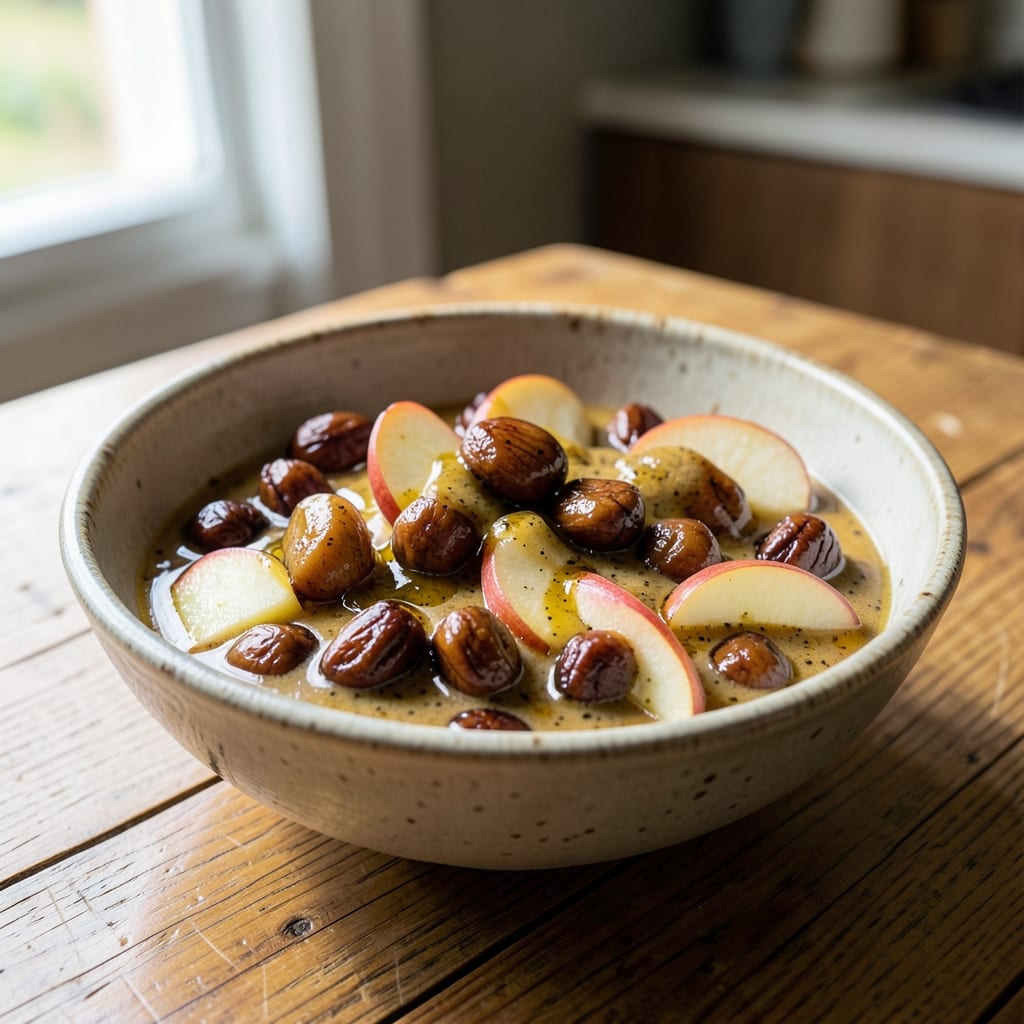
This apple chestnut dressing recipe transforms autumn harvest flavors into a velvety, nutty-sweet sauce perfect for holiday tables. The combination of roasted chestnuts and apples creates a rich, creamy texture with just the right balance of sweetness and tang—ideal for drizzling over roasted vegetables, salads, or even as a dessert glaze. I developed this recipe to capture the essence of fall in every bite, using simple ingredients that come together effortlessly.
The secret lies in roasting the chestnuts until tender and caramelized, which adds depth to the dressing without overpowering the natural sweetness of the apples. A touch of Dijon mustard brightens the flavors, while a splash of apple cider vinegar ensures the right tangy balance. This dressing isn’t just for savory dishes—it’s versatile enough to elevate desserts like cheesecake or pound cake with its nutty-sweet profile.
What makes this recipe stand out is its ability to store well in the refrigerator for up to a week, making it perfect for holiday prep. The texture remains creamy and luscious, ready to be drizzled or spooned at a moment’s notice. Whether you’re hosting a dinner party or simply craving a taste of fall, this dressing delivers restaurant-quality flavor with minimal effort.
Pair it with roasted Brussels sprouts, a charcuterie board, or even as a glaze for baked apples. The possibilities are endless, and the results are always impressive. Let’s create this flavorful dressing that will become a holiday staple.
Ingredients for apple chestnut dressing
Creamy autumn flavors with just 10 simple ingredients. Perfect for holiday tables.
| Ingredient | Amount | Notes |
|---|---|---|
| Roasted Chestnuts 🌰 | 1 ½ cups | Canned or homemade, skin removed |
| Apples 🍎 | 2 medium | Honeycrisp or Fuji, peeled and diced |
| Extra-Virgin Olive Oil 🫒 | ¾ cup | High quality, fruity flavor |
| Apple Cider Vinegar 🍏 | 2 tbsp | For tangy balance |
| Dijon Mustard 🌶️ | 1 tbsp | For subtle brightness |
| Maple Syrup 🍁 | ¼ cup | Grade B for deeper flavor |
| Salt 🧂 | ½ tsp | Diamond Crystal preferred |
| Black Pepper 🌶️ | ¼ tsp | Freshly cracked |
| Fresh Thyme Leaves 🌿 | 1 tbsp | Or 1 tsp dried thyme |
| Vegetable Broth 💧 | ½ cup | Low-sodium preferred |
The chestnuts are the heart of this dressing. Canned roasted chestnuts work perfectly—just drain and chop them. For homemade, roast whole chestnuts at 400°F for 20-25 minutes until tender. Trader Joe's has excellent canned chestnuts, but any brand with no added sugar will do. Apples should be firm and crisp—Honeycrisp or Fuji hold up best during roasting. The key is peeling and dicing them small so they blend seamlessly into the dressing. If you're prepping ahead, store peeled apples in lemon water to prevent browning.
No roasted chestnuts? Toasted pecans or walnuts add a similar nutty depth, though the texture will be slightly different. Swap apple cider vinegar for white wine vinegar if needed, but the apple flavor will be less pronounced. The Dijon mustard is non-negotiable for that subtle brightness—Maille brand is my go-to for consistent quality. Short on maple syrup? Agave nectar or date syrup work well, though the flavor profile shifts slightly. The vegetable broth adds body without overpowering, so don't skip it—even low-sodium versions are fine here. Fresh thyme is ideal, but dried works at one-third the amount.
This dressing keeps beautifully in the fridge for up to 7 days, though it tastes best within the first 3. The texture thickens as it sits, so stir in a splash of water or broth if it becomes too thick. For holiday prep, portion into small jars—perfect for gifting or serving at the table. Freeze for up to 3 months if needed, though texture may separate slightly upon thawing. Always bring to room temperature before serving to appreciate the full nutty-sweet balance.
Why You'll Love This Recipe
- No Chopping Needed: I swear by this trick—just toss pre-peeled apples and store-bought roasted chestnuts into the food processor. Honestly, the only prep is cracking open a jar of mustard and measuring olive oil, which takes less time than scrolling through your phone.
- Sweet-Savory Magic: That first bite where the nutty chestnuts meet the sharp apple cider vinegar? It’s like autumn in a jar. The Dijon mustard adds this sneaky depth that makes it way more interesting than basic vinaigrettes—trust me, it’s the secret weapon.
- Dresses Everything: Slather it on grilled chicken, toss it with roasted veggies, or drizzle it over a charcuterie board. Between us, I’ve even used it as a dip for crusty bread when I’m too tired to cook. It’s the one dressing that works for breakfast (yes, on avocado toast) and dinner.
- Lasts a Week: No sad, wilted leftovers here—this keeps beautifully in the fridge for days. I make a big batch on Sundays, and by Thursday, it’s still bright and tangy. Plus, the chestnuts and apples get softer over time, so the flavor actually improves with age. Budget win.
Step-by-step instructions for apple chestnut dressing
This holiday dressing delivers perfect texture and flavor every time with simple technique.
Toast the Chestnuts for Rich Nutty Depth
In a dry skillet over medium heat, toast the 1.5 cups roasted chestnuts for 3-4 minutes until fragrant and slightly crisp around the edges. You want to enhance their natural sweetness without burning them—watch closely as they darken quickly. Transfer the toasted chestnuts to a food processor and pulse until finely chopped but not pasty. The texture should resemble coarse sand with visible nut pieces remaining. This step builds the dressing's signature nutty foundation that balances the apple sweetness.
Real talk: If you're using canned chestnuts, drain them thoroughly first. Any excess liquid will dilute your dressing's flavor and texture. I press them between paper towels to absorb moisture before toasting. The goal is maximum flavor concentration in every bite.
Sauté Apples and Aromatics for Complex Flavor
In the same skillet (no need to clean it—the fond adds flavor), heat 0.5 tablespoons of the extra-virgin olive oil over medium heat. Add the 2 medium diced apples and cook for 4-5 minutes until they soften slightly but still hold their shape. Add the 1 tablespoon fresh thyme leaves, 0.5 teaspoon salt, and 0.25 teaspoon black pepper, stirring to combine. The thyme will release its piney aroma while the apples develop a caramelized edge. This step creates the dressing's bright, aromatic base that prevents it from being too heavy.
Don't skip this sautéing—it's what transforms fresh apples into flavorful building blocks. If your apples release too much liquid, let it evaporate completely before proceeding. You want them tender enough to blend smoothly but still with some bite.
Blend All Ingredients for Silky Texture
Transfer the sautéed apple mixture to the food processor with the toasted chestnuts. Add the remaining 0.25 cup extra-virgin olive oil, 2 tablespoons apple cider vinegar, 1 tablespoon Dijon mustard, 0.25 cup maple syrup, and 0.5 cup vegetable broth. Pulse the mixture for 30-45 seconds until completely smooth, scraping down the sides as needed. The texture should be thick but pourable—like a rich, nutty applesauce. This blend creates the perfect balance of sweet, tangy, and nutty flavors that define holiday dressings.
Here's the thing—don't over-blend or you'll get a gluey texture. You want visible flecks of chestnut and apple throughout. Taste the mixture now and adjust seasoning if needed. I usually add a pinch more salt or vinegar at this stage to ensure perfect balance before baking.
Bake Until Set and Flavor-Intense
Transfer the dressing mixture to a greased 9-inch baking dish and spread it evenly. Bake at 350°F for 45-50 minutes until the edges are golden brown and the center is just set when gently shaken. The dressing should hold its shape when inverted but still be slightly jiggly in the center. This baking step develops the dressing's signature texture and deepens all the flavors through slow cooking. For even cooking, place the dish on the middle rack of your oven.
Don't walk away during baking—check at the 40-minute mark. Your oven might run hot, so start testing for doneness early. The dressing should be firm enough to slice neatly but still moist. If it's browning too quickly, tent it loosely with foil to prevent over-browning while it finishes setting.
Rest and Serve at Room Temperature
Remove the dressing from the oven and let it cool completely at room temperature for 1 hour before serving. This resting period allows all the flavors to meld together and the texture to firm up properly. The dressing should hold its shape when sliced but still be tender and moist. Serve chilled or at room temperature—it's perfect for stuffing holiday turkeys, pairing with roasted meats, or serving as a side with crispy duck or goose.
For best results, make the dressing a day ahead. The flavors actually improve as they sit, developing deeper complexity. Store leftovers covered in the refrigerator for up to 5 days or freeze for up to 3 months. When reheating, warm gently in the microwave or oven until just heated through—never boil or the texture will break down.
Pro Tips For Making Apple Chestnut Dressing
- TOAST THE CHESTNUTS FIRST: Roasted chestnuts straight from the bag? Skip it. Toast your own in a dry skillet over medium heat for 5-7 minutes until fragrant—this deepens their nutty flavor and cuts through the sweetness of the apples. (Yes, even if you’re impatient like me, don’t rush this.)
- PEEL APPLES LAST MINUTE: Apples oxidize fast, and that gray sludge ruins the dressing’s bright look. Keep them whole until you’re ready to chop, then toss the cut pieces immediately in cold water with a splash of vinegar—this keeps them crisp and prevents bitterness.
- WHISK THE DRESSING COLD: Mixing warm chestnuts and apples into the dressing while still hot? Big mistake. Let everything cool completely first—this ensures a smooth emulsion and prevents the olive oil from separating. (I learned this the hard way after a dressing that looked like soup.)
- USE A THICK VINEGAR: Cheap apple cider vinegar with water added? Your dressing will taste flat. Go for 100% pure, aged vinegar—it adds complexity and balances the sweetness without overpowering. (The extra cost is worth it for that restaurant-quality tang.)
Regional styles of these flavors
New England Classic
In New England, this dressing takes on a slightly spiced profile with added cinnamon and nutmeg—about ½ teaspoon each—to complement traditional Thanksgiving feasts. I like to use Granny Smith apples for their tartness, which balances the sweet chestnuts beautifully. The dressing is often served warm with roasted turkey or as a stuffing for pumpkin bread. Locally sourced maple syrup from Vermont adds an extra layer of authenticity. 🍁
Southern U.S. Twist
Southern cooks often enhance this dressing with smoked paprika and a dash of cayenne pepper—start with ¼ teaspoon smoked paprika and ⅛ teaspoon cayenne—for a subtle smoky heat. I swap apple cider vinegar for white vinegar to cut through the richness, and add a splash of bourbon (1 tablespoon) for depth. This version pairs perfectly with smoked meats like pulled pork or brisket. 🌶️
French-Inspired Version
For a French touch, replace the vegetable broth with chicken stock and add 1 tablespoon brandy instead of bourbon. I also incorporate 1 teaspoon fresh tarragon leaves for an herbal note that elevates the dressing to bistro-quality. This version works beautifully with roasted duck or as a drizzle for apple tart tatin. The texture remains velvety, but the flavor profile becomes more sophisticated and aromatic. 🍷
Italian Autumn Adaptation
In Italy, this dressing transforms into a creamy apple-chestnut condiment with the addition of 1 tablespoon grated Parmesan cheese and ½ teaspoon dried rosemary. I use Bosc pears instead of apples for a softer texture, and a splash of dry white wine replaces the vinegar. This version is perfect for drizzling over roasted vegetables or pairing with prosciutto-wrapped melon. The nutty-sweet balance remains, but the Italian herbs add a fresh, herby brightness. 🌿
Vegan-Friendly Adjustments
To make this dressing completely plant-based, simply omit the vegetable broth and replace it with 1 cup vegetable stock. I also swap the maple syrup for agave nectar to ensure it's vegan-friendly. The texture remains rich and creamy, and it works perfectly as a drizzle for roasted vegetables, salads, or even as a glaze for tofu dishes. The nutty-sweet profile stays intact, making it a versatile option for vegan holiday menus. 💚
Nutrition facts
Frequently asked questions
Can I make this dressing without roasting chestnuts?
Yes! For convenience, use 1.5 cups toasted pecans or walnuts instead. Toast them in a dry skillet for 3-4 minutes until fragrant, then chop finely. The texture will be slightly different but still delicious. Just reduce the maple syrup to 2 tablespoons to balance the stronger nut flavor.
How can I use this dressing beyond holiday meals?
This versatile dressing works beautifully as a drizzle for roasted Brussels sprouts, a glaze for baked apples or pears, or even a dip for cheese boards. Try spooning it over warm polenta or using it as a filling for crepes. The nutty-sweet balance makes it perfect for both savory and slightly sweet applications.
What's the best way to store leftovers?
Store in an airtight container in the fridge for up to 5 days. The texture thickens as it sits, so stir in 1 tablespoon water or broth before serving if needed. For longer storage, freeze for up to 3 months. Thaw overnight in the fridge—never microwave directly from frozen to preserve texture.
Can I make this dressing vegan?
Skip the vegetable broth and use 1 cup vegetable stock instead. Replace maple syrup with agave nectar for a fully plant-based version. The texture remains rich and creamy, perfect for drizzling over roasted vegetables or as a glaze for tofu dishes. All other ingredients are already vegan-friendly.
Why does my dressing taste too sweet?
This usually happens when the apples release extra liquid during cooking. Balance it by adding 1 extra tablespoon vinegar or ½ teaspoon Dijon mustard to cut the sweetness. For future batches, use slightly tart apples like Granny Smith or reduce maple syrup by 1 tablespoon. Taste as you blend—adjust gradually!